
To further strengthen the supervision on non-banking entities (NBFCs), the Reserve Bank on Tuesday issued revised guidelines on a Prompt Corrective Action (PCA) framework for such companies, excluding government-owned ones, effective from October 1, 2022, on the lines of what it had introduced for banks in 2002. The RBI came up with stricter supervisory norms under the PCA framework for banks after their bad loans mounted and balance-sheets bled badly. This involved restricting them from fresh lending, brand opening and, hiring, among others. The RBI said the revised PCA framework is also applicable to all deposit-taking non-banking financial companies (NBFCs), all non-deposit taking NBFCs in the middle, upper and top layers, including investment and credit companies, core investment companies, infrastructure debt funds, infrastructure finance companies and microfinance institutions.

After removing three PSBs - BoI, Mahabank and OBC from the framework, RBI, on Tuesday, took out three commercial banks - Allahabad, Corporation and Dhanlaxmi from the said list.

Researchers have developed an AI-enabled framework to help retailers understand and respond to changing consumer sustainability preferences. The framework uses machine learning to identify consumer segments in real time and translate analytics into business strategies.
The bank will now be in a position to resume normal lending activity, including corporate lending, with tightened risk management framework.

After the merger of regional rural banks (RRBs) under the "One State, One RRB" policy to improve their efficiency and minimise competition among public-sector banks (PSBs) that sponsor them, the government is planning to list at least five RRBs by the end of financial year 2026-27 (FY27). After the latest amalgamation that came into effect on May 1, there are 28 RRBs in 26 states and two Union Territories (UTs), with more than 22,000 branches covering 700 districts.

Bad loans, however, continued to rise in the micro, small and medium enterprises category

The banking regulator is seeking an early exit mechanism for private banks under Prompt Corrective Action.
RBI may also be open to injecting liquidity through open market purchases of bonds but is resisting relaxing capital buffers for banks.

The recapitalisation, the finance minister said, will enhance the lending capacity of state-owned banks and help them come out of RBI's Prompt Corrective Action framework.
'The PCA framework was revised and tightened in April 2017, but there was no discussion in any board meeting. The government does not know the rationale behind revising the framework and how the RBI arrived at it. Similarly, there was no discussion in the board meeting on the revised NPA framework,' said an official.

The government in the Budget 2021-22 has made an allocation of Rs 20,000 crore for the capital infusion in the state-owned banks. The capital position of banks would be reviewed in the next quarter, and depending on the requirement, the infusion will be made to meet the regulatory needs. In the current fiscal so far, all 12 public sector banks have posted a profit, which is being ploughed back to bolster the balance sheet of the banks, sources said.

The interim finance minister said the Insolvency and Bankruptcy Code was helping in recovery of non-performing loans.

The government has already announced infusion of Rs 10,086 crore in Bank of India, Rs 5,500 crore in Oriental Bank of Commerce and Rs 2,159 in United Bank of India.

Out of these seven PSBs, Bank of India is likely to get the highest amount of Rs 10,086 crore, followed by Oriental Bank of Commerce, which might get Rs 5,500 crore through recapitalisation bonds

The Cabinet on Wednesday gave in-principle approval for strategic disinvestment along with transfer of management control in IDBI Bank in line with the Budget announcement earlier this year. The central government and LIC together own more than 94 per cent equity of IDBI Bank. LIC, currently the promoter of IDBI Bank with management control, has a 49.21 per cent stake. The Cabinet Committee on Economic Affairs chaired by Prime Minister Narendra Modi approved the strategic sale of IDBI Bank, an official statement said on Wednesday.

New norms are in place to strengthen regulations for this set of lenders which has been playing a critical role in Asia's third largest economy, notes Tamal Bandyopadhyay.
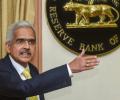
The board deliberated on the governance framework of the RBI and it was decided that the matter needs further examination
'His (Das) approach to work seems that of working as a team with ease in communication.'

The top 50 exposures, amounting to Rs 7.8 trillion, of government-registered non-banking financial companies (G-NBFCs) constitute about 40 per cent of corporate credit within the NBFC sector, indicating concentration risk, according to the Reserve Bank of India's report "Trend and Progress of Banking in India 2022-23". Notably, all the 50 are tied to the power sector, a domain fraught with inherent challenges, the report said. The report highlighted recognising the escalating systemic importance of G-NBFCs, the Prompt Corrective Action (PCA) framework had been expanded to include G-NBFCs excluding those falling within the base layer.
RBI says haste in easing norms for banks harmful to economy.

While they have restructured loans, there is still question mark over the success of such a work-out
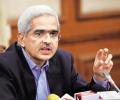
A staunch defender of demonetisation, it would be interesting to see how he handles the government's increasing demand for more cash from the RBI, and letting some weak banks get out of prompt corrective action.
RBI may be inclined to impose severe restrictions on lending in the coming quarters.
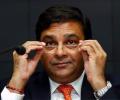
From liquidity, monetary policy operations to financial inclusion, know about RBI monetary policy
The choice clearly is between prompt corrective action and slow but sure destruction, says Tamal Bandyopadhyay.
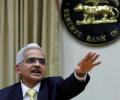
'The banking sector appears to be on course to recovery,' declares the RBI governor.

Public sector banks have raked in more profits in the three months ended June on the back of a persistent decline in bad loans and the trend may have a positive bearing on their balance sheets in the coming quarters. In the June quarter, Bank of Maharashtra (BoM) and State Bank of India (SBI) were in the lowest quartile as far as Gross Non Performing Assets (NPAs) and net NPAs were concerned, according to an analysis of the quarterly financial numbers published by the public sector lenders. Cumulatively, all the 12 public sector banks reported a profit of about Rs 15,306 crore in the three months ended June, registering an annual growth of 9.2 per cent. However, leading public sector lenders -- SBI and PNB -- posted lower profits in the June quarter.

In a filing to stock exchanges, BoI said Reserve Bank of India has placed it under Prompt Corrective Action Framework, consequent to the onsite inspection under the risk based supervision model carried out for the year ended March 2017.
Given the pressure from India Inc and the banking fraternity, it is surmised that the portfolio rejig will take place before April.

Mutual funds, bonds, PPFs, equity and real estate are some options which offer varying rates of return.

The RBI was not party to the decision to demonetize 500 and 1,000-rupee notes, which was taken at the highest level of India's political leadership.
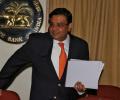
Fitch said the full implications of Patel's resignation will only become clearer once there is some indication of the RBI's policy approach under his replacement, Shaktikanta Das

Progress on the steps taken by Governor Shaktikanta Das' predecessor Urjit Patel to restore financial system integrity will be a key thing to assess any damage to the institution, Subramanian said.
For state-run lenders, the average NPAs shot up to 14.5 per cent, with IDBI Bank, UCO Bank and Indian Overseas Bank having their NPAs at above 25 per cent.

The coming years could be exciting for Bandhan Bank, IDBI Bank, IDFC First Bank, Federal Bank, and CSB Bank.

Vijaya Bank assured employees that the service conditions 'will remain unaffected and staff benefits retained'
Those behind recapitalisation are neither aware nor do they care. After all, they have no skin in this game. And the Lok Sabha elections are round the corner. That's what they care about, points out Debashis Basu.

However, the road to profitability has already hit some hurdles for the Delhi-based bank as the Union government has rejected its demand for an additional capital infusion of around Rs 8,000 crore in 2018-19
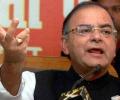
Finance Minister Arun Jaitley has said that the states were free to announce farm loan waivers if they had the fiscal space and that there would be no shortfall this year in divestment and non-tax revenues.
BoB now has over 9,500 branches, 13,400 ATMs, 85,000 employees to serve 12 crore customers.
 © 2026 Rediff.com - Advertise with us - Disclaimer - Privacy Policy - Sitemap - Feedback - About us - Terms of use - Grievances